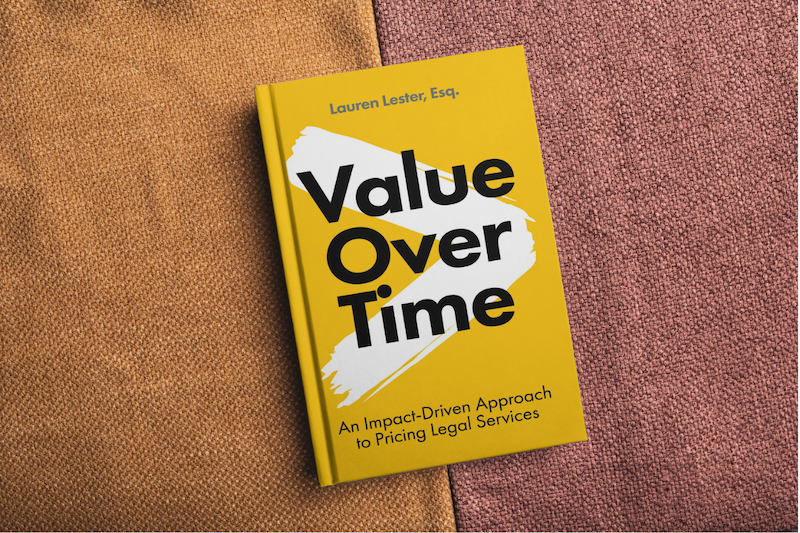
Put the VALUE Framework to Work

The worksheets, templates, and checklists from Value Over Time, organized by chapter.
The book explains the thinking. These resources help with the work. Find the chapter you’re on, download what you need, and fill it in for one type of matter. Start small. Keep going.
Don’t have the book yet? Buy it now!
Start Here (Chapters 1 to 3)
New to value-based pricing, or need to explain it to a partner, a board, or a skeptical colleague? Begin with these.
- The VALUE Mini Guide – The VALUE Framework in brief, and a quick refresher for anyone who has read the book
- Traditional vs. Value-Based Pricing – A side-by-side look at how pricing decisions get made under each model.
Chapter 4 – Verify the Real Problem
Clients rarely ask for what they need. They ask for a will, a divorce, or an LLC, and the worry underneath goes unsaid. These tools help build the habit of hearing it.
- What Clients Say vs. What They Mean – A blank Table 4.1. Pair each initial request with the pain, fear, or worry underneath it.
- Client Impact Statement Builder – A fill-in worksheet for the one sentence that connects your work to the relief it provides.
Chapter 5 – Assemble the Service Options, Part I
Before packaging anything, take inventory of everything a client actually receives. Most practitioners find the list is longer than they thought.
- Elements of Scope Reference – Deliverables, client experience, and emotional benefits for common practice areas, plus the questions to ask before scoping each one.
Chapter 6 – Assemble the Service Options, Part II
This is where the inventory becomes three service options. Map the process first, then assemble from the middle out.
- Process Map Template – Map a matter from intake to close, including the places where it can get more complicated.
- Pricing Matrix – A blank grid for deliverables, client experience, and emotional benefits across the Essential, Standard, and Premium options. The price row waits until Chapter 7.
- Client Persona Anchor Sheet (BONUS) – Messaging for the Budget-Conscious, Forward-Thinking, and Full-Coverage client.

Chapter 7 – Link Value to Price
Price is never just a number. These help set the numbers, starting with Premium, and choose how clients pay.
- Price Positioning Worksheet (BONUS) – Set prices for each option, name the anchor for each client profile, and write the language to say out loud.
- Fee Structure Reference (BONUS) – Transparent ranges, payment per phase, flat fee plus monthly subscription, add-ons, and ways to present pricing.
***All prices in these resources are examples only. Use your own numbers.***
Chapter 8 – Understand What It Takes to Be Profitable
Prices have to sustain the practice and the life outside it. The calculator turns a take-home-pay goal into a revenue target and a caseload.
- Profitability Calculator – A spreadsheet, with a version for nonprofit practices.
Chapter 9 – Execute and Educate
These resources follow the consultation process.
Before the consultation
- Service Option Comparison Table – a client-facing table for your website or consultations
- Client Screening Checklist – evaluate fit before anyone books
During the consultation
- Consultation Script Template – fill in the blanks, practice out loud, and walk in confident
After the consultation
- Engagement Agreement Clauses – sample language for scope, price, assumptions, and renegotiation
- Expectation Setting Templates (BONUS) – pre-consultation confirmation, post-consultation recap, and expectation language
Chapter 10 – Putting It into Practice
One type of matter. Three service options. Sixty days. Then adjust and release the next version.
- Quick Start Checklist – Confirm everything is ready before the test run starts
- Five-Week Implementation Plan – One VALUE step per week, for anyone who needs more runway
- Quarterly Review Rubric – A structure for the sixty-day review and every quarter after
Chapter 11 – Making It Work
Value-based pricing runs on the systems behind it. Pick the one that frees the most time, build it, use it for a month, then build the next.
- Systems Audit – Walk one matter’s process and mark each step as manual, templated, automated, or delegated
- Tech Guide for Lawyers (BONUS) – Help choosing tools for the systems you build
- FAQs (BONUS) – answers to the questions practitioners ask most
Chapter 12 – More than Pricing
Pricing is the start. The practice and the life around it are the point. Keep learning with other solo and small-firm practitioners.
- Become a Solo Success Insider – join the community
- Subscribe to my newsletter (below)
Prices in these resources are examples only. These materials are not legal advice. Check your state’s ethics rules, including trust accounting requirements, before using any template. Questions or something missing? Email us at hello at adifferentpractice.com © 2026 Lauren Lester
Other Resources
Looking for more? These are other resources I recommend.
- Above the Line Network – join a community of legal professionals working to make legal services more affordable for everyday people.
- Law Subscribed – Mathew Kerbis interviews attorneys and technologists building subscription-based legal services and other innovations in legal practice.